
With the global advancement of cannabinoid research and cannabis legalization, CBD (cannabidiol), a non-psychoactive compound, has gained increasing popularity in medical, wellness, and cosmetic sectors. Among various CBD product forms, CBD distillate is a commonly used and widely applicable intermediate material.
1. What Is CBD Distillate?
CBD distillate is a concentrated cannabis extract obtained through extraction and distillation processes. It contains a high percentage of CBD—usually between 60% and 90%—along with trace amounts of other cannabinoids (such as CBG, CBN, CBC), terpenes, lipids, and waxes.
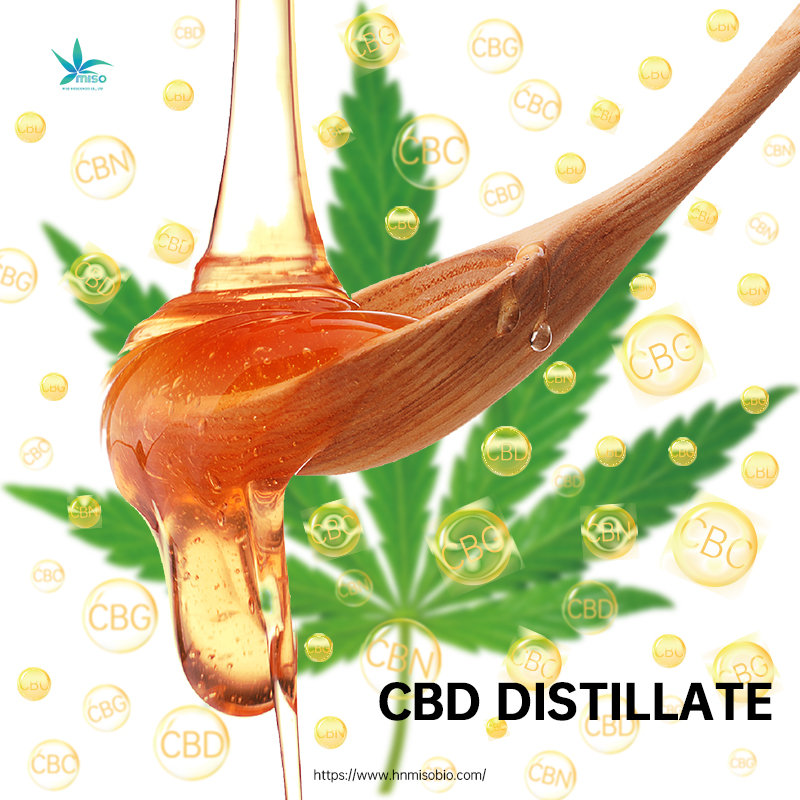
CBD distillate is an intermediate product between crude extract and CBD isolate. It retains a high concentration of CBD while preserving other active plant compounds to some extent.
2. Physical Characteristics of CBD Distillate
CBD distillate generally exhibits the following physical and chemical properties:
Appearance: Ranges in color from golden yellow and amber to dark brown, depending on the raw material, refinement process, and oxidation level.
Smell: Light herbal or hemp-like aroma, sometimes with hints of terpenes.
Solubility: Soluble in oils and alcohols; insoluble in water.
CBD Content: Usually between 60% and 90%, depending on processing.
State: Viscous oil at room temperature; may harden or crystallize at lower temperatures. The higher the CBD content, the more likely it is to crystallize.
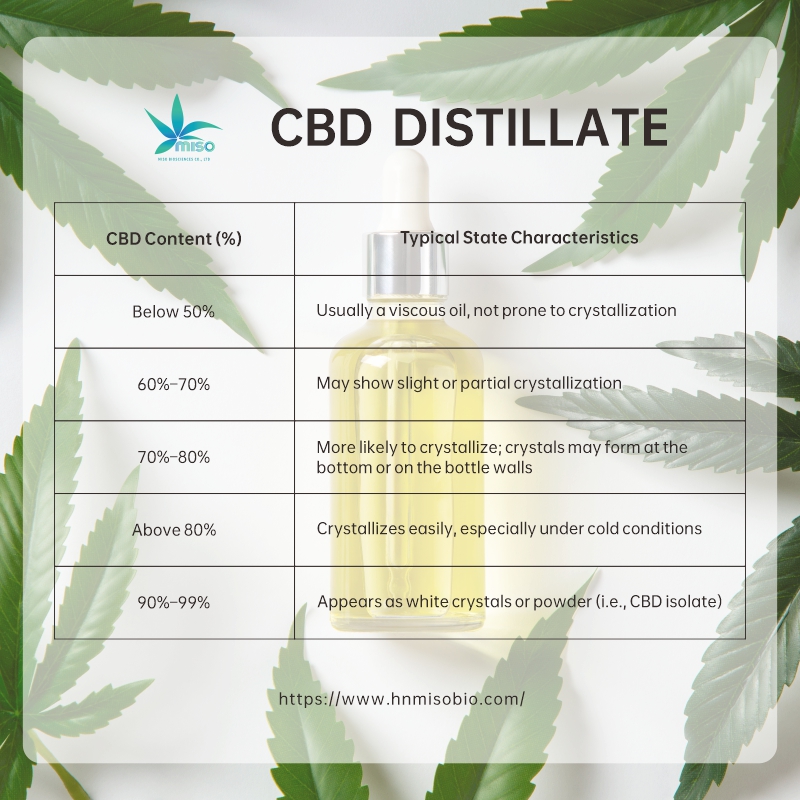
The physical state of CBD distillate mainly depends on its CBD purity level. In general:
When CBD purity exceeds around 60%, crystallization may begin to occur.
Crystallization is more likely under the following conditions:
Low temperatures (especially below room temperature, particularly under 10°C)
Prolonged storage without disturbance
Absence of anti-crystallization agents or diluents
Common Reference Table:
3. Production Process of CBD Distillate
The production of CBD distillate involves several key steps:
1. Extraction: Using hemp flowers and leaves, cannabinoids are extracted using ethanol or supercritical CO₂, producing crude extract.
2. Winterization: This cold filtration step removes lipids and waxes to improve purity.
3. Decarboxylation: Heat is applied to convert inactive CBDa (cannabidiolic acid) into active CBD.
4. Distillation: Using short-path or wiped-film distillation, the extract is refined to separate and concentrate CBD, resulting in the final distillate product.
4. Key Features and Advantages of CBD Distillate
Compared with CBD isolate and crude extract, CBD distillate offers several notable benefits:
High purity with other active components: While maintaining high CBD levels, it retains minor cannabinoids and terpenes, which may contribute to the "entourage effect."
Wide applicability: Suitable for use in pharmaceuticals, supplements, cosmetics, food and beverages, and vape oils.
Flexible processing: Can be further refined into CBD isolate or used in custom formulations.
Controlled composition: Production can be tailored to minimize THC content, even to THC-free levels.
5. Applications of CBD Distillate
Thanks to its potency and versatility, CBD distillate is used in a wide range of industries:
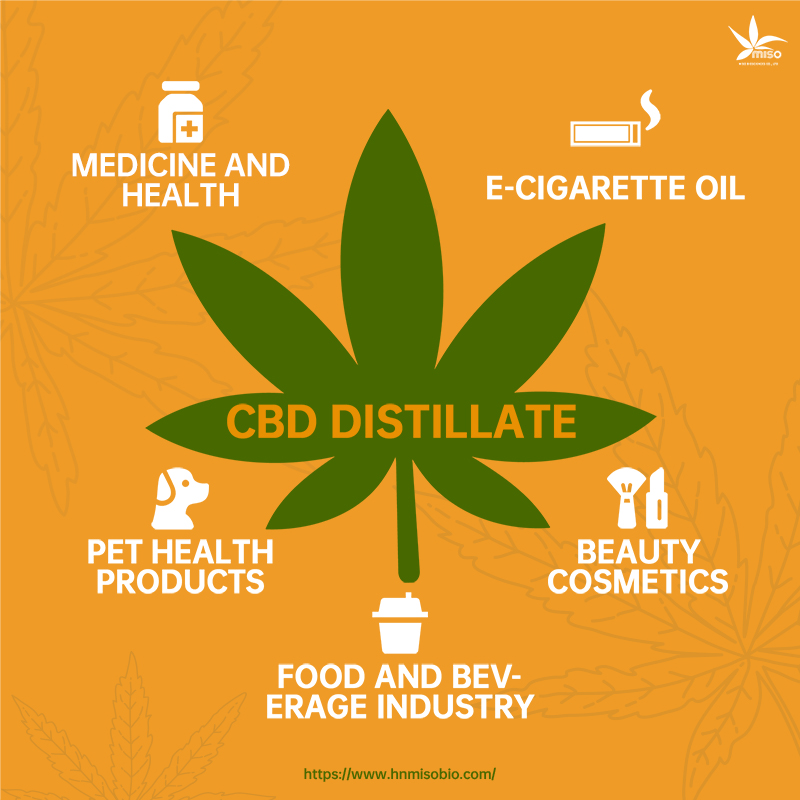
1. Medical and wellness products: Including oral capsules, creams, patches, and CBD oil drops—commonly used for anxiety relief, sleep improvement, inflammation reduction, and pain management.
2. Food and beverages: Added to protein bars, gummies, and functional drinks as a natural wellness ingredient.
3. Cosmetics and skincare: Used in creams, serums, and masks for antioxidant and soothing effects.
4. Vape oils: As the active component in e-liquid formulas, often combined with carrier oils.
5. Pet care: Formulated into CBD pet oils or chewable tablets to help with anxiety and joint issues in animals.
6. Storage and Handling Notes
Storage conditions: Keep in a sealed container, protected from light, and stored in a cool environment to prevent oxidation or crystallization.
Crystallization: At higher concentrations (above 80%), CBD distillate may crystallize at room temperature. Gently warming it (to around 40–60°C) can restore fluidity.
Regulatory considerations: CBD regulations vary by country and region. Always verify legal compliance before use or sale.
CBD distillate serves as a vital link between raw materials and finished products. With its balanced profile of purity and bioactive compounds, it plays an essential role in the global CBD market. Whether used for export, refinement into isolates, or incorporation into final goods, understanding the properties and applications of CBD distillate is crucial for businesses and consumers alike.