
The relationship between cannabinoids and human appetite and metabolism is a fascinating area of scientific inquiry. From the anecdotal "Munchies" phenomenon experienced by cannabis users to the medical use of cannabinoids to treat appetite loss, all evidence points to the central role of the Endocannabinoid System (ECS) in regulating energy balance.
THC: The Appetite "Accelerator"
Among all cannabinoids, Tetrahydrocannabinol (THC) is the primary driver of appetite stimulation. Its mechanism of action on the central nervous system has been extensively researched:

CB1 Receptor Activation: As the main psychoactive compound, THC mimics endogenous cannabinoids and highly activates the CB1 receptors in the brain, particularly in the hypothalamus (the primary control center for appetite and energy balance).
Enhanced Smell and Taste: Studies show that THC can heighten the brain's sensitivity to smell and taste. By boosting perception in the olfactory bulb, it makes food smell better and taste more delicious, thereby significantly stimulating the desire to eat.
Release of Hunger Hormone: THC can stimulate the stomach to release Ghrelin (the hunger hormone). Ghrelin is a potent appetite stimulant that signals hunger to the brain, even when the body has already consumed sufficient calories.
Pleasure Feedback: THC stimulates the brain’s reward system, making the process of eating more intensely pleasurable. This creates a positive feedback loop that encourages continued food consumption.
CBD: The Appetite "Regulator"?
In contrast to THC, the effect of Cannabidiol (CBD) on appetite is more nuanced and complex, and it is generally not considered an appetite stimulant:
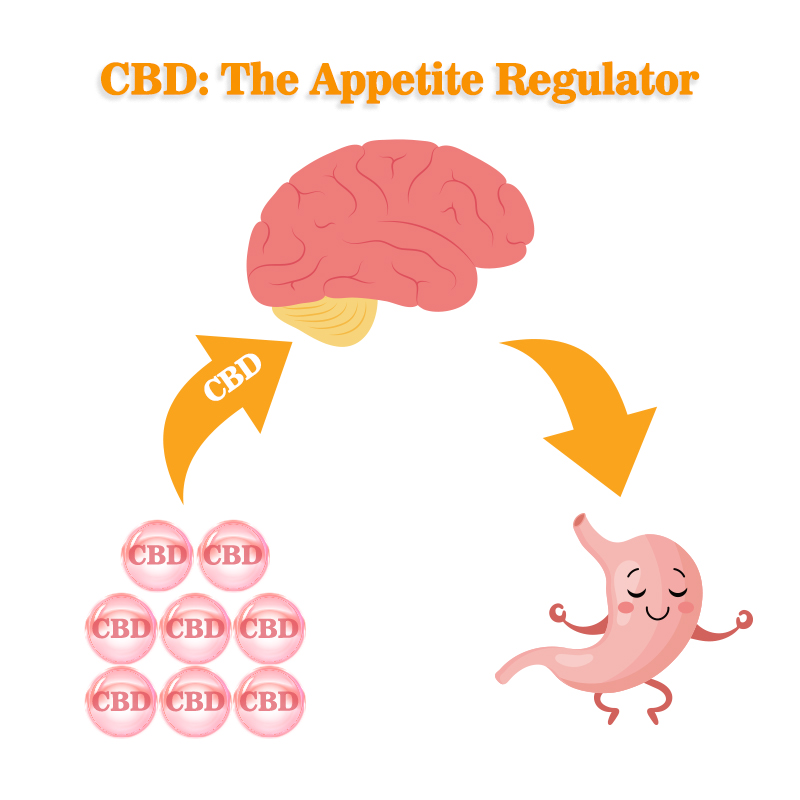
Indirect Action: CBD has low binding affinity for the CB1 receptor. Instead, it may exert its effects by modulating the levels of other endocannabinoids or through non-CB1/CB2 receptor pathways.
Potential Suppressant Effect: Some research and anecdotal evidence suggest that CBD may indirectly help regulate weight and appetite, potentially even acting as a mild appetite suppressant, particularly for those dealing with emotional eating. However, its exact mechanism of action remains inconclusive.
Counteracting THC Effects: CBD is often used to mitigate some of THC's side effects, including partially reducing the intense appetite stimulation (munchies) caused by THC.
Medical Applications and New Discoveries
The relationship between cannabinoids and appetite holds significant value in the medical field:
Treating Appetite Loss: THC-containing medications (like Dronabinol) have been approved for treating severe appetite loss and weight loss (cachexia) in patients with AIDS or those undergoing chemotherapy.
Exploring Weight Management: Scientists are investigating the effects of other cannabinoids, such as CBN (Cannabinol) and THCV (Tetrahydrocannabivarin), on appetite and metabolism. THCV is particularly hypothesized to have appetite-suppressing potential because it may act as an antagonist at the CB1 receptor—the exact opposite effect of THC.
Conclusion
The core of the cannabinoid-appetite relationship lies in the high activation of the CB1 receptor by THC, a mechanism that strongly promotes appetite by enhancing sensory pleasure, releasing the hunger hormone, and stimulating the brain's reward centers. In contrast, CBD’s role tends toward balancing and regulation. As research deepens, understanding the precise actions of these cannabinoids will aid in developing safer and more effective treatments, whether for conditions involving appetite deficiency like anorexia and cachexia, or for potential future strategies in weight management.