
As the global hemp and cannabinoid industry continues to mature, CBD has become one of the most widely discussed and commercialized compounds. Yet a persistent question still appears in customer conversations, regulatory discussions, and even some business negotiations:
“Can orally ingested CBD convert into THC in the stomach?”
This concern affects product safety perception, compliance strategy, and even brand communication. It’s time to address it with scientific clarity.
Where Did This Concern Come From?
The idea originated from a handful of early in-vitro studies where CBD was placed in strong acid, organic solvents, high temperatures, and low-moisture conditions. Under these artificial laboratory setups, CBD could indeed cyclize into THC-like compounds.
However:
These conditions do not represent the human stomach.
Despite this, the results were amplified by media headlines, leading to widespread misunderstanding across the industry and among consumers.
Chemistry Perspective: Human Gastric Acid Is Not Enough
While CBD and THC share structural similarities and can theoretically interconvert under specific conditions, the human stomach environment is fundamentally unsuitable for this reaction:
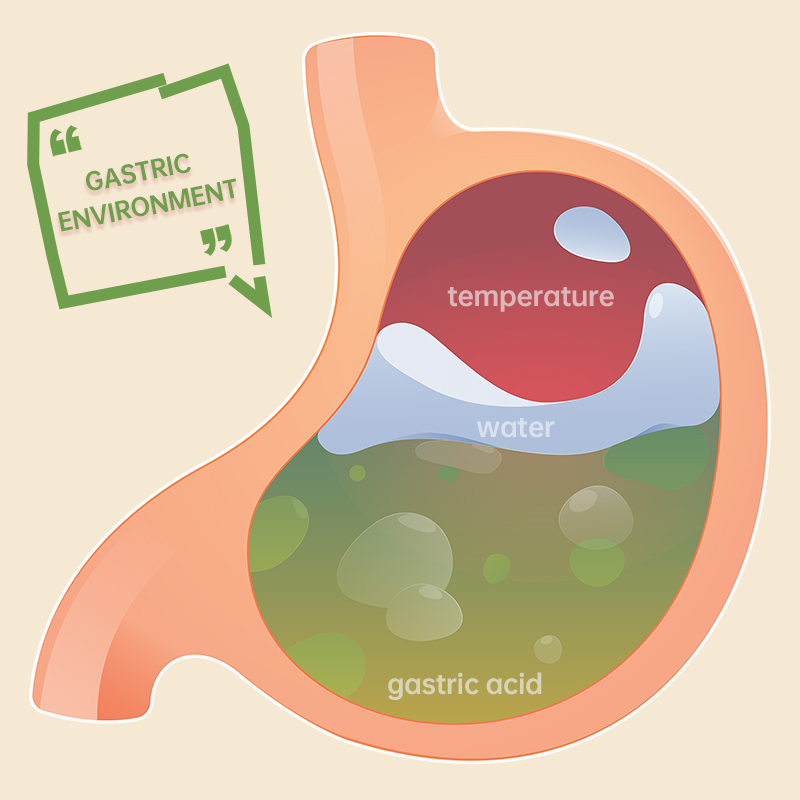
Gastric acid is not strong enough (pH 1–3)
The stomach is a high-water environment, which suppresses THC formation
Temperature is only around 37°C, far below reaction requirements
Food, enzymes, and proteins create a chemically complex environment
Reaction time is short and constantly disrupted by gastric mobility
In other words:
The chemical prerequisites for CBD → THC conversion are simply not met inside the human body.
A growing body of peer-reviewed clinical research has directly tested this question. Across multiple human trials involving oral CBD administration, the findings are remarkably consistent:
1. No detectable THC in the bloodstream
Neither Δ9-THC nor its main metabolite 11-OH-THC was found at quantifiable levels.
2. CBD follows a different metabolic pathway
CBD is predominantly metabolized into 7-OH-CBD and 7-COOH-CBD, which have no psychoactive effects.
3. Animal studies show the same outcome
No meaningful conversion to THC has been observed in vivo.
Modern scientific evidence is unequivocal: CBD does not convert into THC in humans.
Regulatory Viewpoint: Why No Authority Lists It as a Risk
Major regulatory bodies—including FDA, EFSA, and Health Canada—do not classify “CBD converting into THC” as a safety concern.
Why?
There is no scientific evidence supporting the reaction in vivo
THC levels in compliant CBD products are controlled and measurable
There is no documented case of THC-positive drug tests caused by CBD alone
For regulators, this is not a risk, and for industry stakeholders, it is not a compliance barrier.
What Actually Matters: Product Quality, Not Human Chemistry
The real variable is the product itself:
Is the raw material GMP or ISO certified?
Are third-party COAs consistent and transparent?
Is THC content within local regulatory limits (0.0% or ≤1 ppm)?
The issue is manufacturing quality, not gastric metabolism.
Conclusion: CBD Does Not Convert Into THC in the Human Stomach
Bringing together chemistry, physiology, clinical data, and regulatory consensus, the conclusion is clear and well supported:
Orally consumed CBD does NOT convert into THC in the stomach.
This misconception comes from misinterpreting early laboratory studies—not real human biology.
For businesses, brands, and consumers, this means:
No risk of unexpected psychoactive effects
No risk of THC conversion through digestion
No risk of THC-positive results when using compliant CBD products
In short, CBD is safe, stable, and non-psychoactive when consumed orally.