
In recent years, CBD (Cannabidiol) has gained increasing attention for its potential to support both physical and mental well-being. Among its many benefits, one particularly interesting area of study is CBD’s ability to help regulate and balance appetite. Unlike THC (Tetrahydrocannabinol), which is known to stimulate hunger and sometimes cause overeating, CBD acts in a much more balanced way. It doesn’t make you feel excessively hungry, nor does it completely suppress your appetite—instead, it helps your body find its natural equilibrium.
1. The Connection Between CBD and the Endocannabinoid System
The human body contains an internal regulatory network known as the Endocannabinoid System (ECS). It consists of receptors (CB1 and CB2), endocannabinoids, and enzymes, and plays a crucial role in maintaining homeostasis—including appetite, energy balance, and emotional regulation.
CBD does not bind directly to CB1 receptors like THC does. Instead, it modulates the activity of the ECS indirectly, influencing the release of neurotransmitters. Studies have shown that CBD can reduce overactivity in CB1 receptors, which helps decrease impulsive eating behaviors, while also affecting serotonin pathways to ease anxiety-related or emotional eating.
2. CBD’s Bidirectional Regulation of Appetite
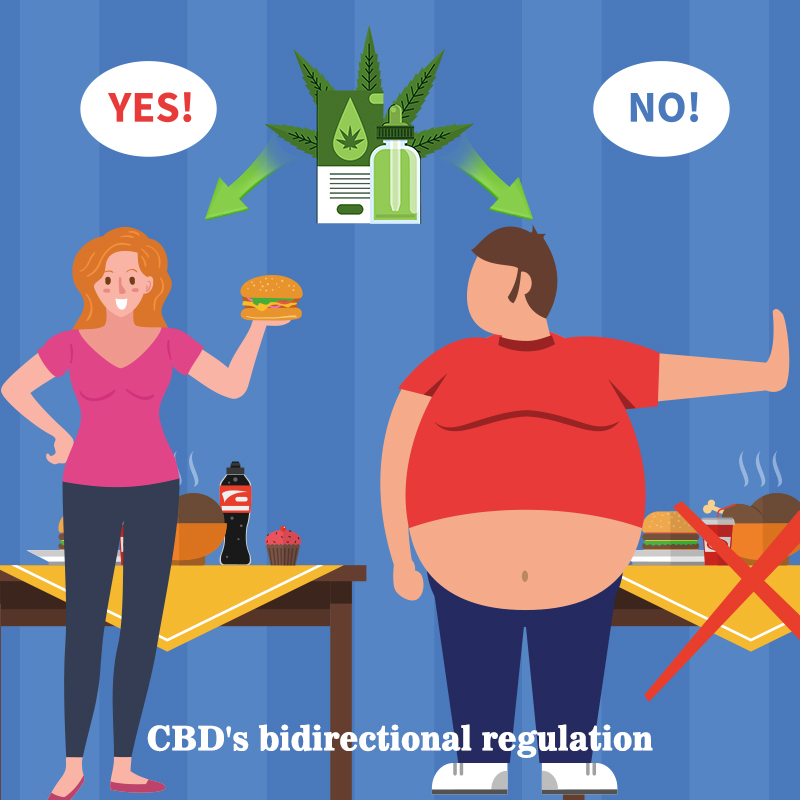
One of CBD’s most remarkable features is its bidirectional regulatory effect—it can either increase or decrease appetite depending on the body’s needs.
For individuals who tend to overeat, CBD may help reduce stress, stabilize hormone levels, and curb cravings.
For those who struggle with low appetite or poor digestion due to anxiety or fatigue, CBD can improve gut health and promote relaxation, thereby indirectly enhancing appetite and nutrient absorption.
This adaptive mechanism distinguishes CBD from traditional appetite suppressants or stimulants, which often act unilaterally.
3. CBD and Metabolic Health
Some studies suggest that regular, moderate use of CBD may promote metabolic efficiency by encouraging the conversion of “white fat” into “brown fat.” Brown fat burns energy more effectively, which implies that CBD could play a positive role in weight management and metabolic balance.

Many users have also reported that CBD helps them become more mindful of hunger and fullness cues, leading to healthier eating patterns. In today’s fast-paced lifestyle, where stress and irregular diets are common, this balanced effect can be especially beneficial.
4. Safety and Usage Recommendations
CBD is widely recognized as a non-psychoactive and safe compound when sourced properly. However, product quality and purity are essential. Always choose CBD products that are tested by third-party laboratories and contain THC levels below the legal limit.
It’s best to start with a low dose and gradually adjust according to your body’s response. Those with specific health conditions—such as metabolic disorders or those taking medication—should consult a healthcare professional before use.
5. Conclusion
CBD is not simply a “weight-loss” or “appetite-suppressing” product. Rather, it is a natural regulator that helps restore your body’s internal balance and supports healthier eating behaviors.
As scientific understanding continues to evolve, CBD’s role in appetite control, metabolic health, and emotional well-being will likely become even more significant in the years to come.