
As one of the most widely used CBD raw materials, CBD isolate has attracted significant attention in recent years. But a common question still appears frequently in the market:
“Can CBD isolate be consumed directly?”
The short answer is: Yes — but it depends on the product grade, purity, and intended application.
CBD isolate is typically a white crystalline powder with a CBD purity of up to 99% or higher. Since it contains almost no THC, terpenes, or other cannabinoids, it is often considered one of the purest forms of cannabidiol available.
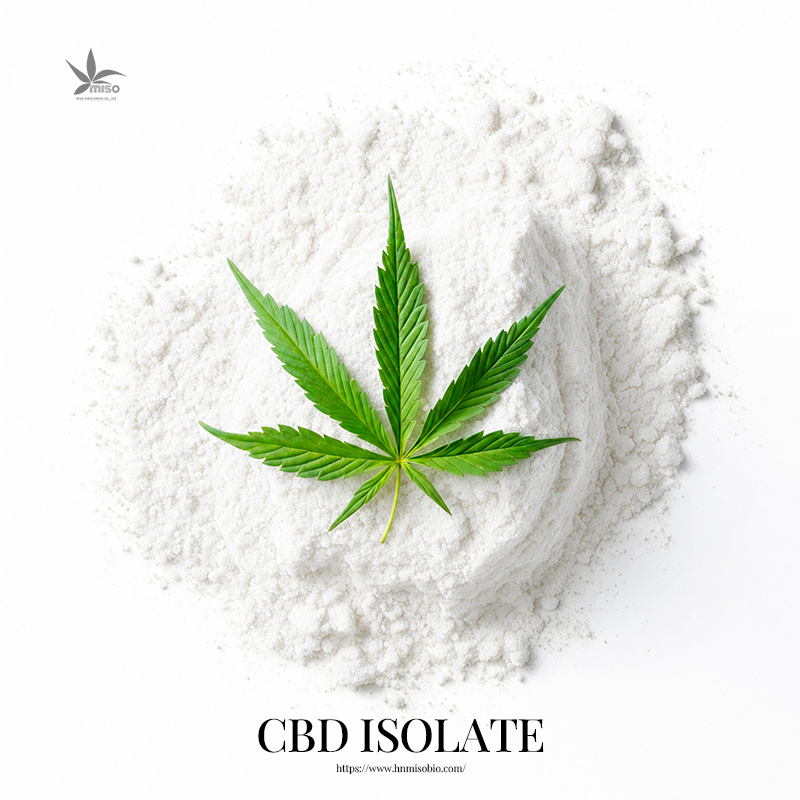
From a technical perspective, food-grade or pharmaceutical-grade CBD isolate can indeed be consumed directly. Some consumers place the powder under the tongue for sublingual absorption, while others mix it into beverages, capsules, gummies, or functional foods.
However, not all CBD isolate on the market is suitable for direct consumption.
The key difference lies in:
• Production standards
• Residual solvents
• Heavy metal testing
• Microbial control
• THC compliance
• Whether it meets food-grade or pharmaceutical-grade specifications
In the industrial hemp industry, CBD isolate is more commonly used as a raw ingredient rather than a finished consumer product. It serves as a core material for:

CBD oils and tinctures
Gummies and beverages
Capsules and softgels
Skincare and cosmetics
Vape products
Pet supplements
Functional wellness products
Another important point is bioavailability.
Pure CBD isolate alone may have lower absorption efficiency compared to formulations combined with carrier oils (such as MCT oil) or terpenes. This is one reason why many brands prefer formulated products rather than direct isolate consumption.
At the same time, regulations vary greatly across countries and regions. In some markets, CBD can be used in food and supplements, while in others, it may still face restrictions. Compliance remains one of the most important factors in the global CBD business.
As CBD research continues to evolve, CBD isolate is no longer just a “raw powder.” It has become a versatile ingredient applied across wellness, beauty, nutraceutical, and pharmaceutical-related industries.
The future discussion may no longer be:
“Can CBD isolate be consumed directly?”
But rather:
“How can CBD isolate be formulated more safely, effectively, and compliantly?”
As consumer awareness grows and global regulations gradually become clearer, the CBD industry is moving from a “novel ingredient market” toward a more mature and professional stage.
For manufacturers, this means higher requirements for purity, stability, traceability, and compliance.
For brands, it means focusing not only on “what CBD is,” but also on how to create safer, more effective, and more user-friendly products.
In the future, CBD isolate may continue expanding into areas such as functional nutrition, sports recovery, skincare, pet wellness, and even pharmaceutical research.
And perhaps this is exactly why CBD isolate continues to attract so much global attention:
Not simply because it is a cannabinoid — but because it is becoming a versatile ingredient with real commercial and application potential across multiple industries.