
New CBD brands often spend weeks comparing prices — and underestimate the part of the process that actually determines their launch date: logistics.
Minimum order quantities, production lead times, documentation, and freight can each add weeks to a timeline. From our experience working with first-time importers, these are the six points worth planning around.
"CBD powder" is not a single product. Before requesting a quote, define:
Clear specifications produce accurate quotes and prevent surprises later.
MOQs differ by product type. Isolate produced in large batches typically has a higher MOQ than custom or private-label runs, where the minimum is often driven by packaging rather than raw material.
MOQs are not arbitrary: they reflect batch economics, quality control, and setup time. Many suppliers, including us, can support smaller trial orders so a brand can validate a formula before committing to full volumes.
A realistic schedule includes more than production:
Build your launch calendar from the conservative end of the estimate, not the optimistic one.
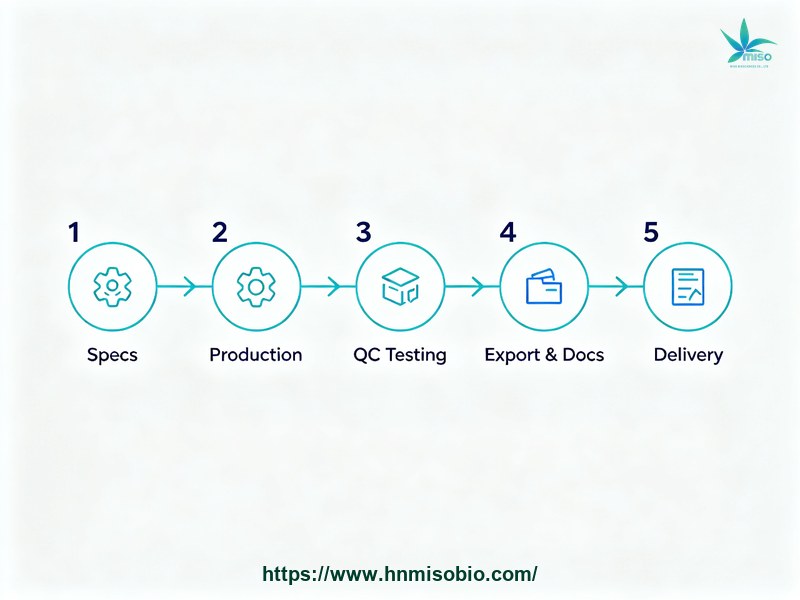
Documentation delays are one of the most common causes of missed timelines. Depending on your market, expect to need:
Collecting these in parallel with production — rather than after it — saves valuable time.
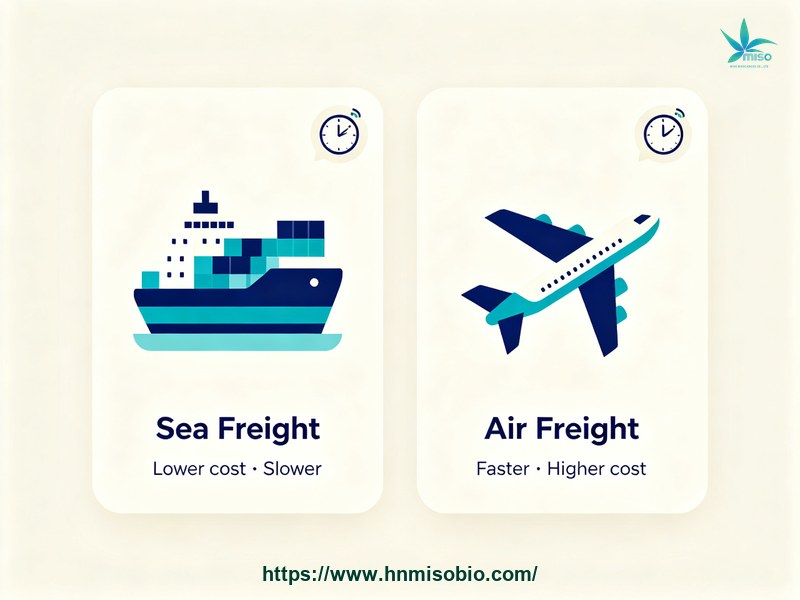
Match the mode to the order's urgency and margin, not just the freight quote.
Customs checks, document requests, and seasonal peak periods are normal in international trade. A buffer of one to two weeks turns these routine events from emergencies into manageable delays.
A competitive price only matters if the product arrives on time, correctly documented, and ready to sell. Treat logistics as part of your product strategy — define specs early, ask about MOQs and lead times up front, and choose a supplier who communicates clearly through every stage.
Related reading
Hunan Miso Biosciences Co., Ltd. Tel: +86-731-82281512 Email: admin@hnmisobio.com Address: Rooms 707-708, R&D Building, Hunan Fangsheng Pharmaceutical Co., Ltd., No.299 Jiayun Road, Lugu Sub-district, Changsha High-Tech Development Zone, Hunan Province, China