
In the pursuit of "ageless" skin and that coveted "lit-from-within" glow, you have likely encountered the term "antioxidant" countless times. Whether it is a recommendation from a beauty influencer or an advertisement for a high-end serum, antioxidants have become a non-negotiable step in modern skincare. But have you ever wondered: Why exactly does our skin need antioxidants? Is our skin truly "rusting"?
This article will deconstruct the underlying logic of antioxidants and guide you through this vital "defense war" for your skin.
I. What is "Oxidation" in Skin?
To understand antioxidants, we must first identify their opponent: Free Radicals.
At a chemical level, stable molecules possess paired electrons. Free radicals, however, are unstable molecules that have lost an electron, leaving them with an "unpaired electron." To regain stability, these free radicals act like "scavengers," aggressively "stealing" electrons from healthy skin cells, proteins (like collagen), or lipids.
This process of "theft" is called oxidation. The most intuitive examples are a sliced apple turning brown and shriveled when exposed to air, or an iron nail rusting outdoors. Under the influence of UV rays, pollution, and stress, our skin undergoes a similar "oxidative" process—it just happens more slowly and invisibly.
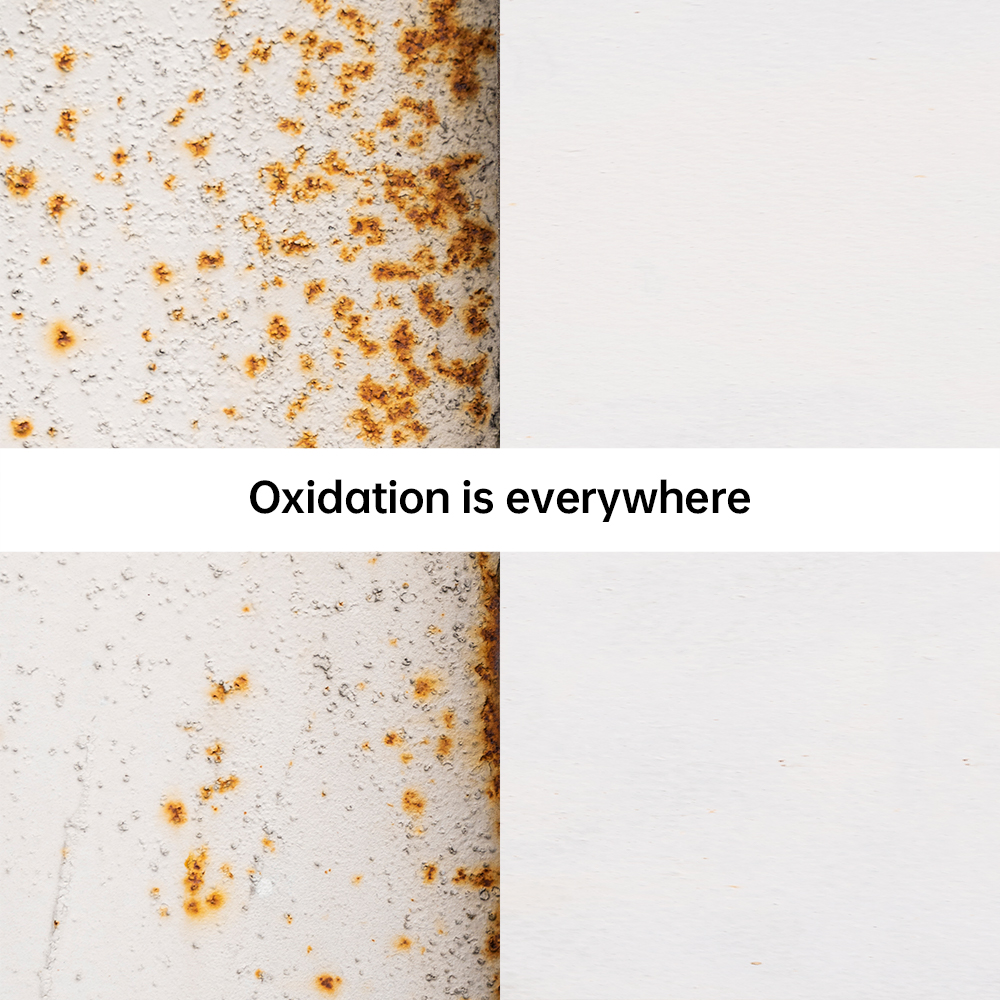
II. Where Do Free Radicals Come From?
Free radicals do not just come from the outside world; they are categorized into endogenous and exogenous sources:
1. Endogenous (Internal Metabolism): Our cells naturally produce reactive oxygen species (ROS) as a byproduct during energy production (respiration and metabolism).
2. Exogenous (External Aggressors): This is the primary target of antioxidant skincare, including:
UV Radiation: Approximately 80% of free radicals are triggered by sunlight, which is the leading cause of "photoaging."
Air Pollution: Smog, car exhaust, and PM2.5 particles can enter pores and induce inflammation.
Blue Light and Radiation: Prolonged exposure to electronic devices can also accelerate oxidative stress.
Lifestyle Habits: Staying up late, high stress, smoking, and a high-sugar diet.
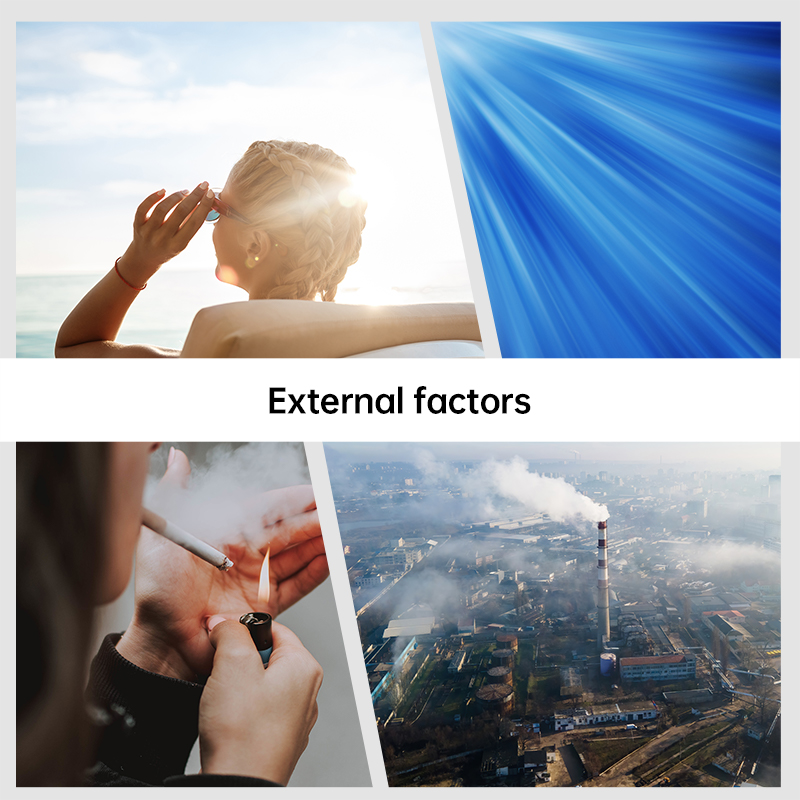
[Image showing external sources of skin oxidation like UV rays and pollution]
III. How Does Oxidation Destroy Your Skin?
If free radicals are left to run rampant without effective suppression, the skin enters a state of Oxidative Stress. This results in an "all-out assault" on the skin's structure:
1. Collagen Collapse (Sagging and Wrinkles)
Free radicals attack the collagen and elastin fibers in the dermis. These fibers are the "scaffolding" that maintains skin elasticity. When they break and diminish, the face begins to sag, and fine lines eventually deepen into permanent wrinkles.
2. Dullness and Pigmentation (Melanin Overdrive)
The oxidative process activates tyrosinase, an enzyme that stimulates melanocytes to overproduce melanin. This is why, even if you wear sunscreen, your skin can still look sallow, dull, or develop stubborn dark spots if you lack antioxidant protection.
3. Barrier Damage (Sensitivity and Inflammation)
The lipid film on the skin's surface contains fats that are highly susceptible to oxidation (lipid peroxidation). Once these lipids are damaged, the skin’s ability to lock in moisture fails, and its defense against external irritants weakens, leading to dryness, sensitivity, and recurring acne.
[Image comparing young healthy skin vs. skin with broken collagen and elastin fibers due to oxidation]
IV. Antioxidants: The "Electron Donors"
Since oxidation is inevitable, human skin is equipped with a built-in antioxidant system (such as the enzyme SOD). However, as we age and environmental conditions worsen, this internal defense system often falls into a "deficit." This is where antioxidant skincare acts as an essential "reinforcement."
The principle of an antioxidant is remarkably "generous": It proactively donates one of its own electrons to a free radical, stabilizing it and preventing it from harming healthy cells. Most importantly, after donating an electron, the antioxidant itself remains stable and does not turn into a new free radical.
V. The "Generals" of Antioxidant Ingredients
Understanding the theory is the first step; the second is recognizing these powerful "electron donors" on an ingredient label:
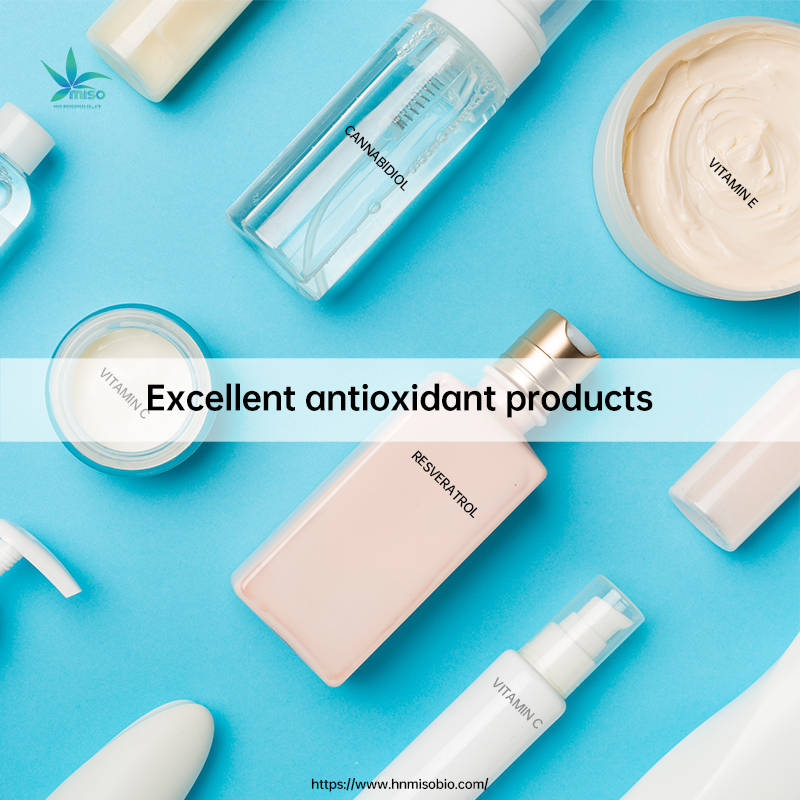
Vitamin C (VC): The gold standard of antioxidants. It neutralizes free radicals, promotes collagen regeneration, and brightens the complexion. It is ideal for morning use to defend against daytime damage.
Vitamin E (VE): A lipid-soluble antioxidant. Often paired with VC, it protects the lipids in cell membranes and possesses excellent reparative properties.
Ferulic Acid: Acts as a "stabilizer" and "amplifier" for VC and VE, potentially doubling their efficacy and stability.
Resveratrol: Extracted from red wine and grape skins, it offers exceptional anti-inflammatory and long-lasting antioxidant capabilities, making it a favorite for nighttime repair.
Ergothioneine: A rising star in skincare with high stability and penetration, reaching the core of the cells to provide protection.
Astaxanthin: One of the most powerful natural antioxidants known, with radical-scavenging abilities hundreds of times greater than Vitamin E.
VI. The Strategic Guide: "Morning C, Night A"
One of the most scientifically backed antioxidant regimens in the industry is the "Morning C, Night A" routine.
Morning C (Antioxidation + Protection): During the day, the skin faces the harshest challenges from UV rays and pollution. Applying a Vitamin C product before your sunscreen can neutralize free radicals that may be generated if sunscreen is missed or its efficacy wanes, creating a "" effect.
Night A (Anti-aging + Repair): Nighttime is the peak period for skin self-repair. Using Vitamin A (Retinol) promotes cell turnover, while pairing it with Resveratrol or Coenzyme Q10 helps clear residual oxidative byproducts from the day.
[Image showing the 'Morning C Night A' skincare routine with vitamin C and retinol products]
VII. Conclusion: Antioxidants are "Prevention Over Cure"
Many people complain: "I've used an antioxidant serum, but why don't I see an immediate change?"
This is precisely the charm of antioxidants. While whitening or acne treatments are "reactive," antioxidants are "long-term proactive defense." If you begin a consistent antioxidant routine at age 25, your skin five years later may still look 25. Without it, the skin would likely show visible signs of oxidative damage.
Antioxidation is not just for immediate brightness; it is for firmness ten years down the line. It is the gentlest yet most persistent way to negotiate with time.