
From Understanding Emotions to Building Long-Term Self-Regulation
Anxiety has quietly become a shared emotional background of modern life.
It may not always feel intense, but it is often persistent; not always obvious, yet constantly present. Many people are not facing a specific crisis—rather, they live in a state of “I don’t know exactly why, but I just can’t fully relax.”
To truly learn how to live with anxiety, the first step is not to suppress it, but to understand it.
I. Anxiety Is Not an Enemy — It Is a Protective Mechanism
From a biological perspective, anxiety is fundamentally an early-warning system.
When the brain detects potential risk, it activates the nervous system to increase alertness and improve survival chances.
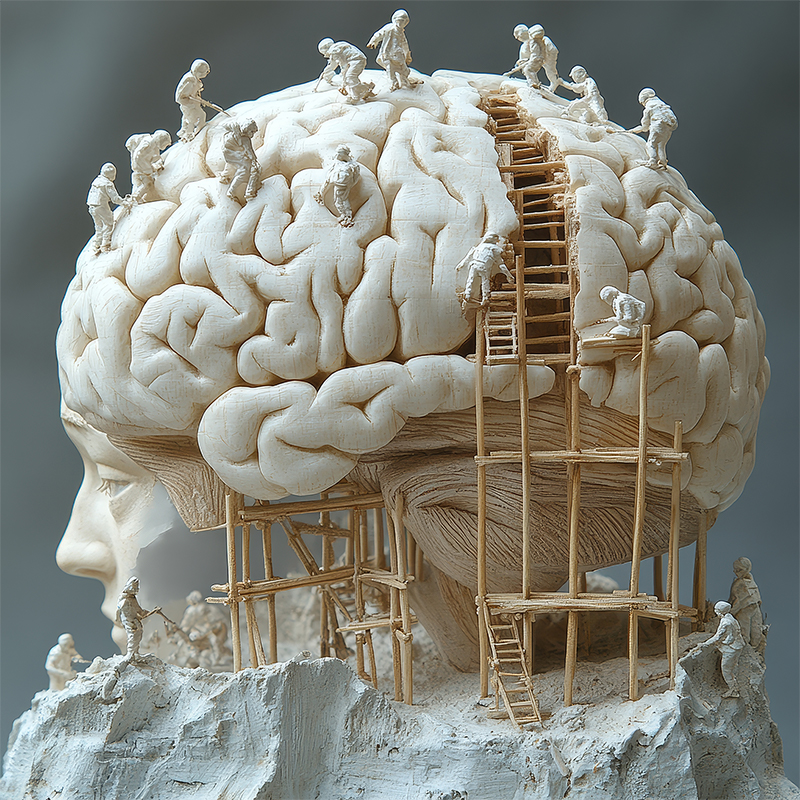
The problem is that human physiology evolved to respond to short-term threats—predators, hunger, immediate danger—while modern life presents continuous, abstract stressors, such as:
Work performance
Social evaluation
Uncertain futures
Constant information overload
As a result, systems designed for emergencies are activated for prolonged periods, and anxiety becomes chronic.
II. Uncertainty Is the Core Driver of Modern Anxiety
Humans naturally seek certainty, yet modern society offers very little of it.
Career paths are no longer linear, relationships are less stable, and definitions of success constantly shift. When people must keep making decisions without being able to predict outcomes, anxiety emerges naturally.
Anxiety does not mean you are overthinking—it often means you are living within an unstable system.
III. Overexposure to External Evaluation Undermines Emotional Safety
Likes, rankings, KPIs, income levels, and social comparison have become dominant measures of value.
When personal worth is continuously outsourced to external validation, genuine relaxation becomes difficult.
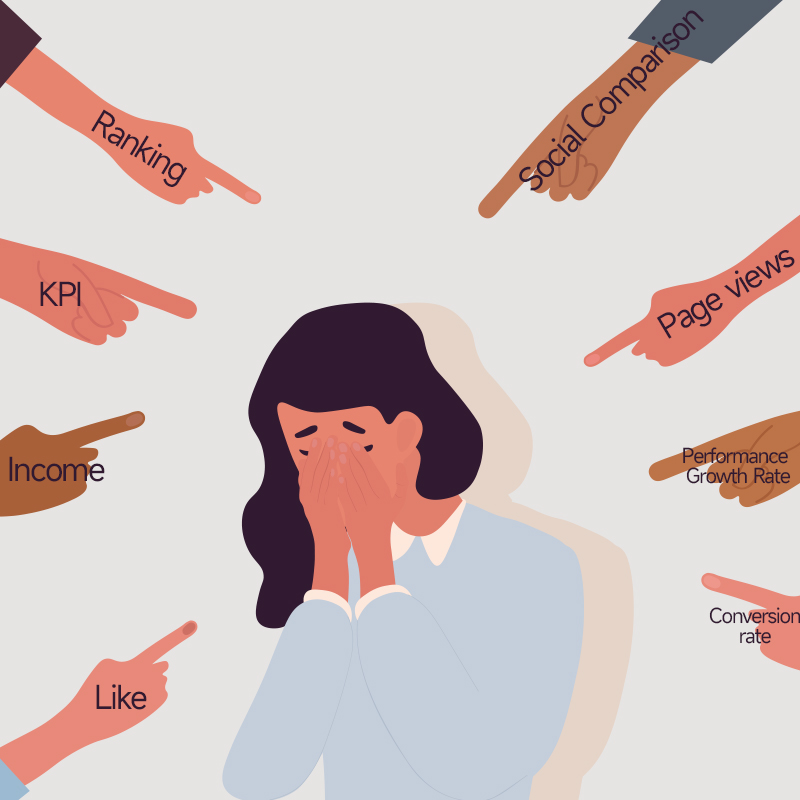
Living in a constant state of being evaluated keeps the nervous system tense—even during rest, the mind struggles to shut down.
IV. Anxiety Affects More Than Just Emotions
Long-term anxiety has system-wide effects on the human body and mind.
Psychological effects
Reduced focus and concentration
Catastrophic thinking
Increased self-doubt
Physical effects
Sleep disturbances
Digestive discomfort
Chronic fatigue
Weakened immune function
Behavioral effects
Avoidance and procrastination
Excessive control
Emotional outbursts
Many physical complaints are not caused by organ dysfunction, but by unresolved, long-term stress.
V. The Real Concern Is Chronic Anxiety
Short-term anxiety is normal—and sometimes necessary.
What truly requires attention is persistent anxiety without a clear cause.
When anxiety becomes a default state, people gradually lose the ability to feel joy and begin merely coping with life rather than living it.
VI. Learning to Live With Anxiety, Not Eliminate It
Anxiety does not need to be completely eradicated.
A more realistic and effective goal is to build the ability to coexist with it:
Recognizing early signs of anxiety
Accepting its presence without self-blame
Reducing its intensity through rhythm, boundaries, and awareness
When you can clearly say, “I am anxious right now, but this is not all that I am,” anxiety begins to lose its control.
VII. Responsible External Support:
The Role of Health Supplements in Anxiety Management
One important truth must be acknowledged:
Anxiety is not always something that can be resolved through mindset alone.
When the nervous system has been operating under prolonged stress, physical support can help create the conditions necessary for psychological adjustment.
In recent years, certain health supplements and functional ingredients have gained attention as supportive tools for emotional regulation and relaxation.
1. The Link Between Emotions and the Nervous System
Emotional stability is closely tied to neurotransmitter balance. Under chronic stress, these systems may become dysregulated, keeping the body in a persistent “fight-or-flight” mode.
In such cases, purely cognitive approaches may have limited effectiveness.
2. Plant-Derived Compounds Such as CBD
Globally, plant-derived compounds such as CBD (cannabidiol) have been studied and used as supportive options for emotional balance and sleep quality.
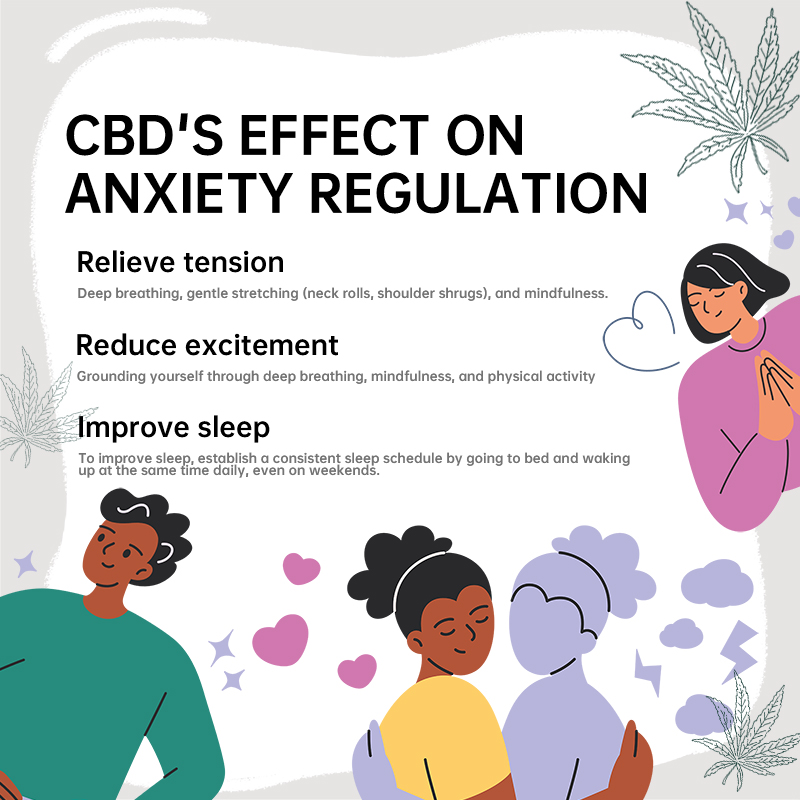
Research and real-world use suggest that CBD may interact with the body’s endocannabinoid system (ECS), potentially helping to:
Reduce feelings of tension and restlessness
Lower excessive neural excitation
Improve sleep onset and quality
It is important to emphasize that CBD is not a medication, nor a cure for anxiety. It is best understood as a supportive tool, not a standalone solution.
3. Support, Not Dependence
The value of any health supplement lies in its ability to help the body return to a recoverable state, not to replace lifestyle or emotional work.
Effective anxiety management still relies on:
Stable routines
Emotional expression
Healthy boundaries
Self-awareness
When used responsibly, health supplements can help lower physiological “noise,” making psychological adjustment more achievable.
Conclusion:
Understanding Yourself Matters More Than Defeating Anxiety
Feeling anxious does not mean you are weak, unsuccessful, or lacking resilience.
Often, it means you care deeply, take responsibility seriously, and are sensitive to your environment.
Living with anxiety is not about giving up on growth—it is about learning to treat yourself with greater compassion in a complex world.
Sometimes, when you stop trying so hard to escape anxiety, you finally begin to move beyond it.